
Most Teams Don’t Lack Knowledge. They Lack a Usable System.
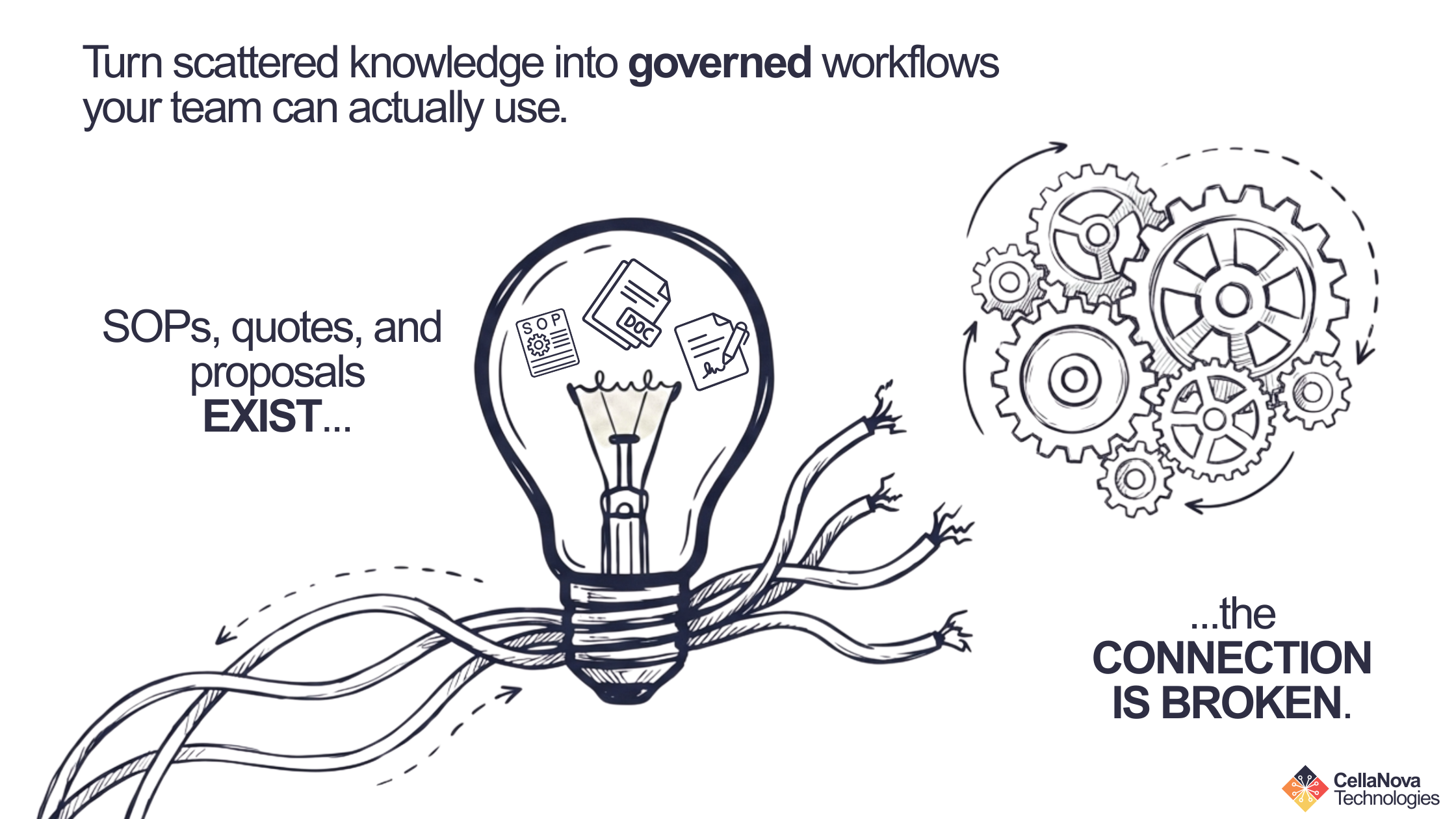
Most teams are not starting from zero.
They have the quotes.
They have the proposals.
They have the spreadsheets.
They have the templates.
They have the SOPs.
They have the process notes.
They have the person who knows where everything lives.
The knowledge exists. The problem is that it is scattered, hard to search, inconsistently maintained, and too dependent on whoever has been doing the work longest. That is not a lack of knowledge. That is a system problem. And for many service-based teams, that system problem shows up in very practical ways.
Quotes take too long because pricing logic is buried in old files.
RFP responses get rewritten because past answers are hard to find.
Source documents drift out of date because no one owns the update process.
Reviewers spend time checking where information came from instead of improving the output.
One person becomes the unofficial archive, rulebook, and emergency hotline.
The team has knowledge. It just does not have a usable way to retrieve, review, govern, and apply it under real working conditions. That is where better systems begin.
Knowledge Is Not Useful Just Because It Exists
A document sitting in a shared drive is not automatically useful. A spreadsheet with important pricing rules is not automatically usable. A past proposal with a strong answer is not automatically reusable. An SOP is not automatically current just because it has an official-looking title and lives in a folder called “Operations.”
Useful knowledge has to be findable.
It has to be current.
It has to be trusted.
It has to be connected to the workflow.
It has to be reviewable by the right people.
It has to be maintained as the business changes.
Otherwise, knowledge becomes clutter. The team may technically have the answer, but if no one can find it, verify it, or apply it confidently before the deadline, it does not function like knowledge. It functions like a scavenger hunt with business consequences.
Scattered Knowledge Slows Down Real Work
Scattered knowledge does not stay neutral. It slows the team down. In pricing workflows, scattered knowledge may look like old quotes, supplier sheets, rate cards, spec documents, margin rules, and contract terms spread across too many folders. In proposal workflows, it may look like past responses, compliance language, case studies, capability statements, security questionnaires, and approved boilerplate buried across years of submissions. In internal operations, it may look like SOPs, templates, notes, client handoff documents, process maps, and training materials living in different systems with unclear ownership.
The result is familiar:
People search.
People ask around.
People copy from old files.
People recreate work that already exists.
People wait for the expert.
People make judgment calls without a clear source trail.
That is not efficient. It is just normal enough that teams stop noticing how much time it consumes.
The One-Person Knowledge Bottleneck Is a Risk
Every team has that person.
The person who knows which file is current.
The person who remembers which old quote can be trusted.
The person who knows which RFP answer was approved.
The person who can explain why the process works the way it does.
The person who knows what not to use.
That person is valuable. But when the workflow depends on them, the business is carrying risk.
If they are unavailable, the work slows down.
If they are overloaded, quality drops.
If they leave, the knowledge leaves with them.
If they are the only person who knows what to trust, the system is not really a system.
The answer is not to replace that person. The answer is to structure what they know so the team can use it responsibly. Your best people should shape the system. They should not have to be the system.
AI Does Not Magically Fix Disorganized Knowledge
AI can help. It can retrieve, summarize, draft, classify, compare, organize, and support decisions. Used well, it can save time and reduce repetitive work. But AI does not magically turn scattered knowledge into a governed workflow.
If the source material is outdated, the system may retrieve outdated material. If approved and unapproved content are mixed together, the system may surface the wrong answer. If no one owns the workflow, the system will not create accountability. If human review is undefined, outputs may become harder to trust. If the process itself is unclear, automation may simply make confusion move faster.
That is why the first step is not “add AI.” The first step is understanding the workflow and the source material behind it.
Better Systems Start With Actual Source Material
A usable system should be built from the real material the team already depends on. That may include:
Quotes
Proposals
Spreadsheets
Rate cards
Supplier pricing sheets
Spec documents
Contract terms
SOPs
Templates
Case studies
Compliance language
Past responses
Review notes
Institutional knowledge
This matters because business teams do not need generic AI outputs floating around without context. They need systems grounded in the way their work actually happens. A pricing team needs to know which source informed a quote. A proposal team needs to know which approved response was retrieved. An operations team needs to know whether the SOP is current. A reviewer needs to know where an output came from before approving it.
That source trail is not a technical bonus. It is the trust layer.
A Usable System Is Retrievable, Reviewable, and Governed
A usable knowledge system has three practical qualities.
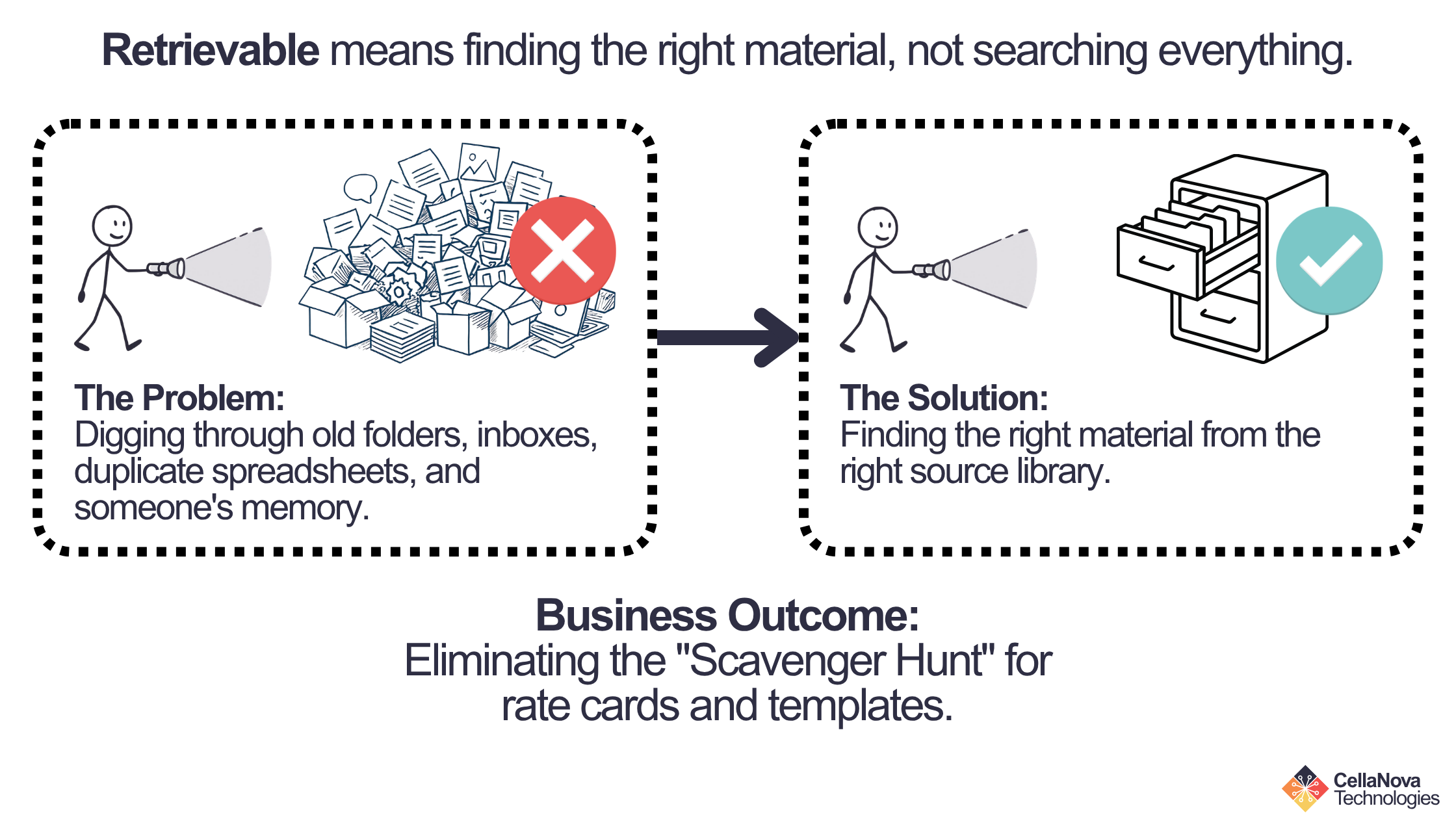
1. It is retrievable.
The team can find the right source material without digging through old folders, inboxes, duplicate spreadsheets, or someone’s memory. Retrieval does not mean “search everything.” It means finding the right material from the right source library.
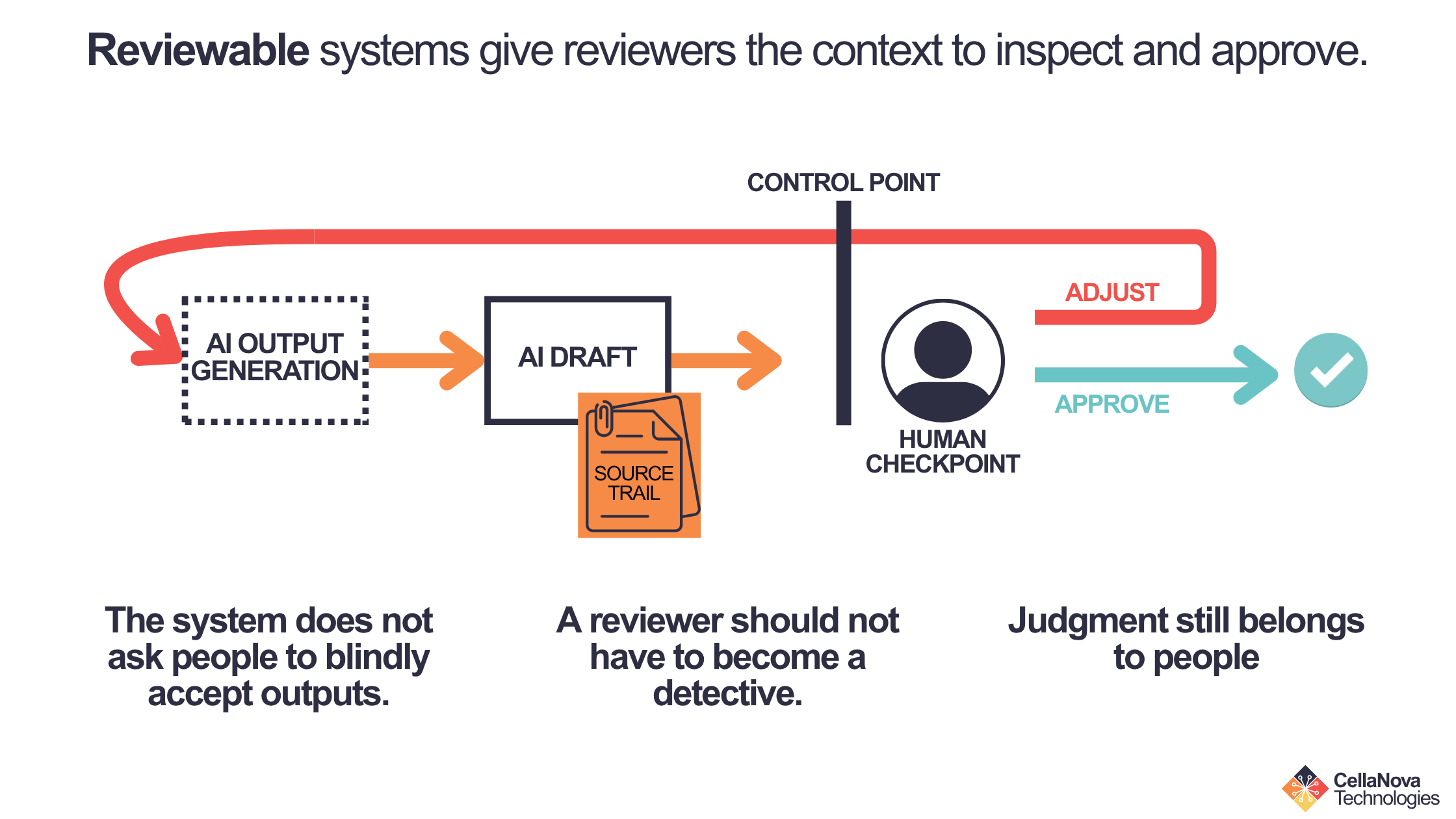
2. It is reviewable.
The system does not ask people to blindly accept outputs. It gives reviewers the context they need to inspect, adjust, approve, or reject the work. That matters for pricing, proposals, compliance, customer-facing communication, and any workflow where judgment still belongs to people.
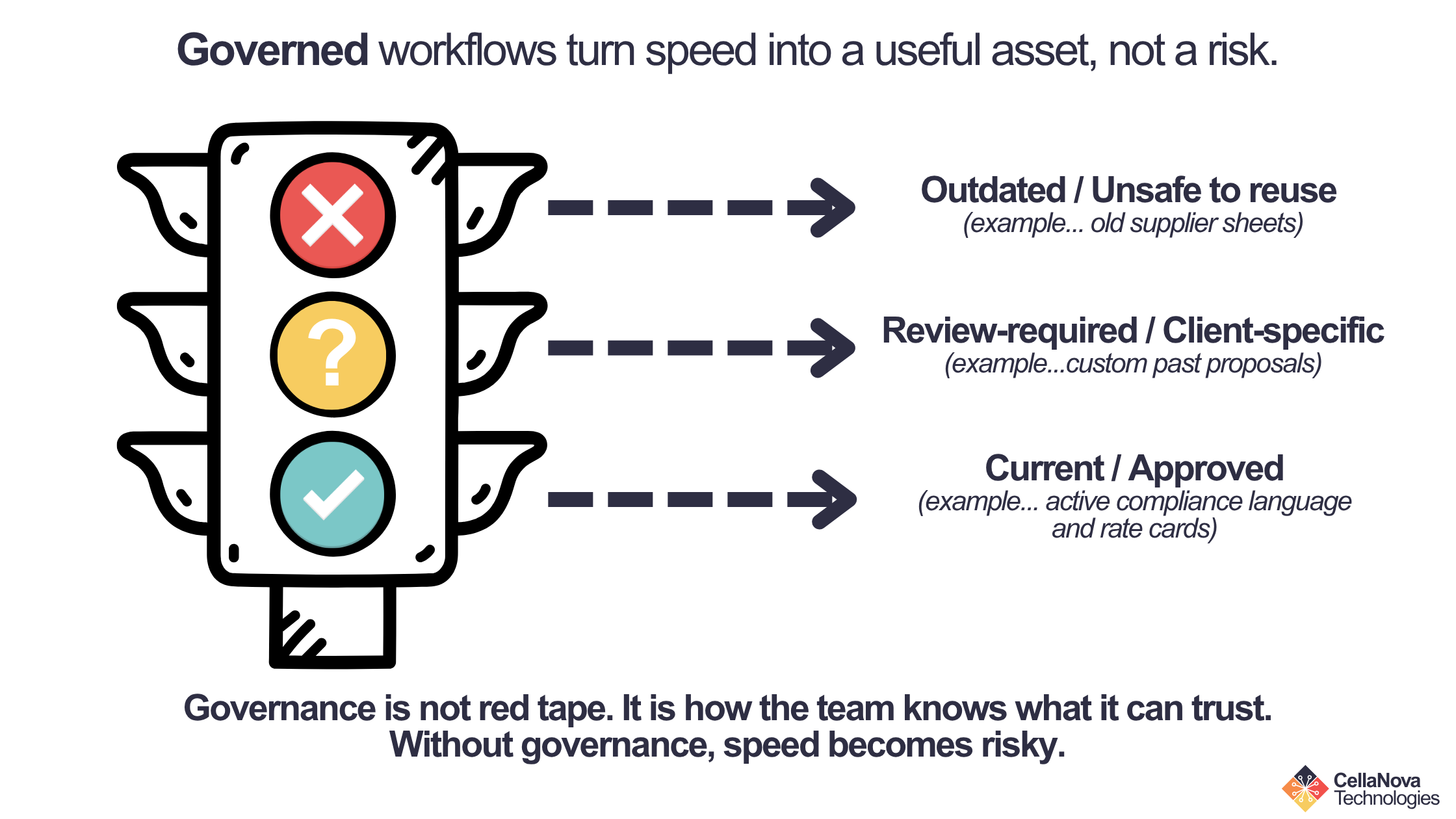
3. It is governed.
The team knows what content is current, approved, outdated, review-required, client-specific, or unsafe to reuse. Governance is not red tape. It is how the team knows what it can trust. Without governance, speed becomes risky. With governance, speed becomes useful.
Pricing Problems Are Often Knowledge-System Problems
Many teams think they have a pricing problem. Sometimes they do. But often, the deeper issue is that pricing source material is scattered.
Rate cards live in one place.
Supplier sheets live in another.
Spec documents are updated but not clearly retired.
Margin rules live in someone’s head.
Past quotes become accidental source material.
Estimators ask, “Which file are we supposed to use?”
That is not just a math problem. It is a source-material problem.
A Pricing Enginehelps when teams need a governed way to retrieve current pricing information, apply rules and margin logic, and keep human review in the workflow.
The goal is not to replace estimator judgment. The goal is to give that judgment better source material.
Proposal Problems Are Often Knowledge-System Problems
The same pattern shows up in RFP response work. Most proposal teams already have answers. They have past proposals, case studies, capability statements, compliance language, security questionnaire responses, team bios, implementation language, and approved boilerplate. But if that content is buried, outdated, hard to search, or mixed with unapproved language, the team rewrites from scratch.
Again. Not because the answer does not exist. Because the answer is not usable under deadline pressure.
An RFP Response Engine helps when teams need a governed way to retrieve, adapt, and review past response knowledge.
The goal is not to generate generic proposal text. The goal is to help the team respond from what the organization already knows.
Some Teams Need Advisory Before They Need a Build
Not every team is ready for a managed system. Sometimes the team needs help first.
The workflow may need mapping.
The source material may need review.
Tool options may be unclear.
Use cases may need prioritization.
Leadership may need a practical plan.
The team may need to decide whether to build, build later, or not build at all.
That is where AI Workflow Advisory fits. Advisory is not a weaker option. It is the right option when the team needs clarity before implementation.
A strong advisory process can help a team avoid overbuilding, underbuilding, buying the wrong tool, or automating a workflow that no one has clearly defined. Sometimes the smartest AI decision is not “build.” Sometimes it is “map the workflow first.” Old-fashioned? Maybe. Still undefeated? Absolutely.
The Right First Step Is Fit
Before a team buys another AI tool, scopes a custom build, or asks everyone to reorganize three years of documents by Friday, it should ask:
What path actually fits?
A team may be ready for a managed build if it has a recurring workflow, real source material, a workflow owner, review needs, and a business case. A team may need advisory if it needs workflow mapping, source-material readiness review, tool guidance, use-case prioritization, or internal decision support. A team may need neither if there is no source material, no recurring workflow, no owner, no budget, or no realistic business case yet. That kind of routing matters.
The goal is not to force every workflow into a build. The goal is to make the right operational decision.
Better Systems Reduce Rework
The value of a usable system is not only speed. It is less rework.
Less time searching for the right file.
Less rewriting content that already exists.
Less asking the same expert the same question.
Less reviewer cleanup.
Less confusion about what is current.
Less risk from old content resurfacing.
Less dependency on informal memory.
That does not mean the system does all the work.
People still review.
People still tailor.
People still approve.
People still make the judgment calls.
But the system gives them a better starting point. And a better starting point changes the entire workflow.
Better Systems Make Human Review Stronger
Human review is not a weakness in AI-assisted workflows. It is the control point. Pricing outputs should be reviewed before they affect customers, margins, or delivery expectations. Proposal responses should be reviewed before they become formal submissions. Compliance-related content should be verified before it is reused. Customer-facing outputs should not move forward without accountability.
A usable system makes review easier by showing the source trail, surfacing relevant context, and clarifying what needs approval. The reviewer should not have to become a detective. They should be able to use their judgment. That is the whole point.
Better Systems Need Stewardship
Even a well-built system can become unreliable if it is not maintained.
Source materials change.
Pricing updates.
New proposals are written.
Compliance language evolves.
Case studies age.
SOPs drift.
Review rules change.
People create workarounds.
A system that launches clean can still decay if no one owns updates, governance, and review. That is why stewardship matters. A usable system has to stay usable. Otherwise, the team eventually stops trusting it and returns to the old habits: folders, spreadsheets, side channels, and “just ask the person who knows.” The old mess is patient. It waits.
Final Thought
Most teams do not lack knowledge. They lack a usable system. They have the documents, the spreadsheets, the proposals, the quotes, the process notes, and the experienced people. What they often do not have is a governed way to retrieve, review, maintain, and apply that knowledge when the work is moving quickly.
That is the real opportunity. Not AI for the sake of AI. Not another tool for the sake of another tool. A usable system built around the work the team actually does.
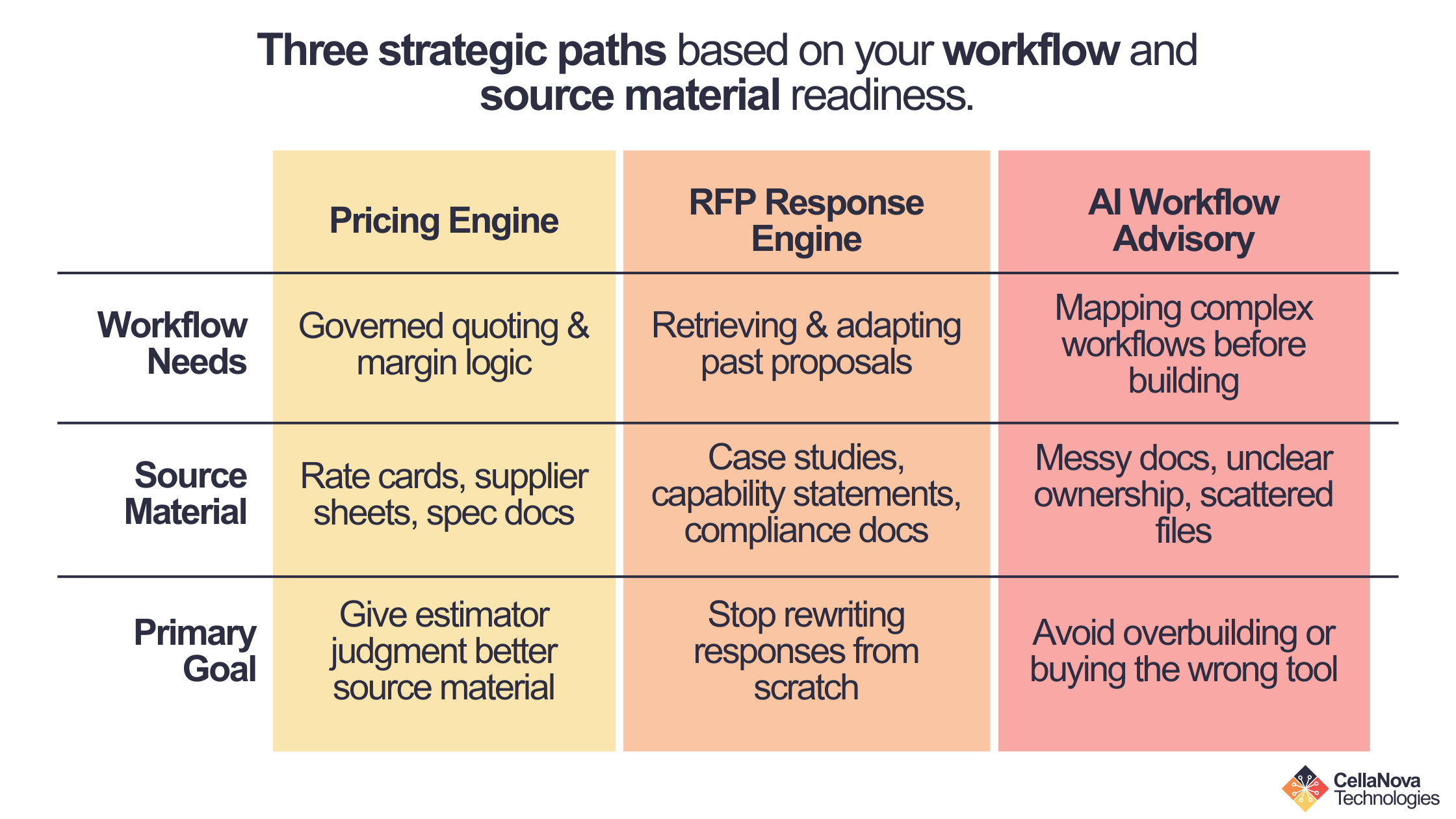
For some teams, that means a Pricing Engine. For others, it means an RFP Response Engine. For teams earlier in the process, it may mean AI Workflow Advisory before any build decision. The right path depends on the workflow, the source material, the readiness, and the business case.
But the starting point is the same: Turn scattered knowledge into a system your team can actually use.
If your team has the knowledge but not a usable system, start by finding the right path. Book a Solution Fit Call. CellaNova will help determine whether your team needs a managed build, AI Workflow Advisory, or a lighter next step.
Download the overview of this post to share here.
