
NovaLog

The NovaLog is where CellaNova Technologies shares what we’re building, learning, and refining across our AI ecosystem. From CustomCore systems to NovaEngines and beyond, each post explores how intelligent tools can help real teams work smarter — not harder.
Field notes from the frontier of Agentic AI.
A Pricing Engine Is Not a Calculator
A calculator can apply a formula. But complex quoting workflows depend on rate cards, supplier sheets, spec documents, contract terms, margin rules, and human review. Here’s why a Pricing Engine is not a calculator — and why that distinction matters.
Choosing the Right RFP Response Engine
Not every team needs the same RFP Response Engine. Learn how to choose the right system shape, compare managed and self-hosted deployment options, and use the Blueprint process to define source material, governance, and workflow before building.
What an RFP Response Engine Actually Does
A generic chatbot does not know your approved language, past proposals, pricing references, or review process. Learn how an RFP Response Engine helps teams work from trusted source material and create stronger first drafts faster.
Stop Rewriting the Same Proposal Over and Over
Most teams do not have a proposal problem. They have a knowledge access problem. Learn how an RFP Response Engine helps teams reuse trusted content, draft faster, and keep proposal work grounded in approved source material.
Stop Guessing With AI: Why Workflow Clarity Comes Before Automation
Most teams do not have an AI problem. They have a workflow clarity problem. This inside look at CellaNova’s NovaLabs Discovery Session and CellaNova Assessment Artifact explains how we turn scattered automation ideas into a structured, decision-ready plan. NovaLabs is positioned as CellaNova’s strategy and discovery entry point, helping teams move from uncertainty to clear next steps across the broader ecosystem.
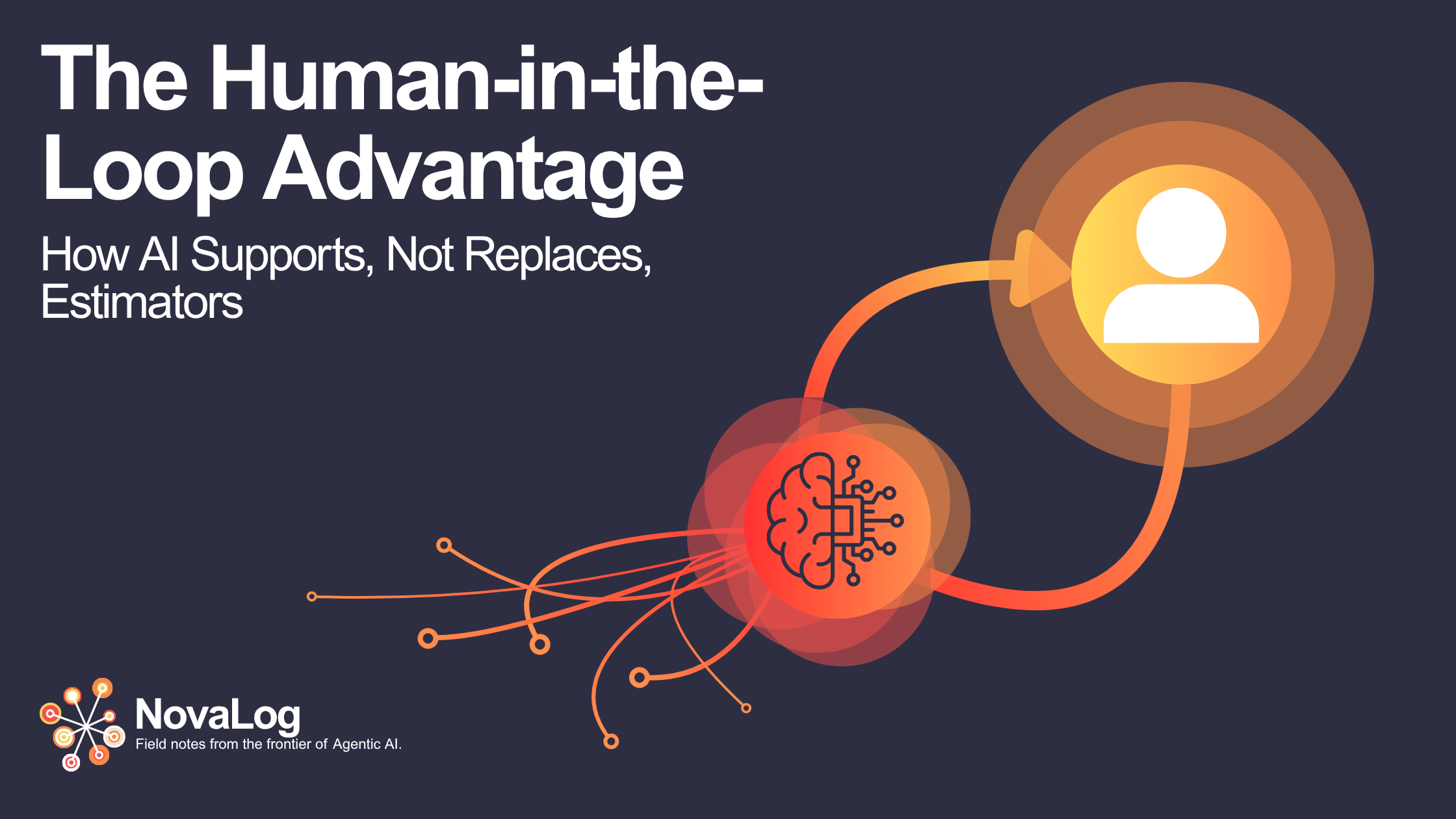
The Human-in-the-Loop Advantage: How AI Supports, Not Replaces, Estimators
Agentic AI doesn’t replace expertise — it amplifies it. Our human-in-the-loop design keeps estimators in control while AI handles the details, creating faster, more confident decisions rooted in real-world judgment.